Description
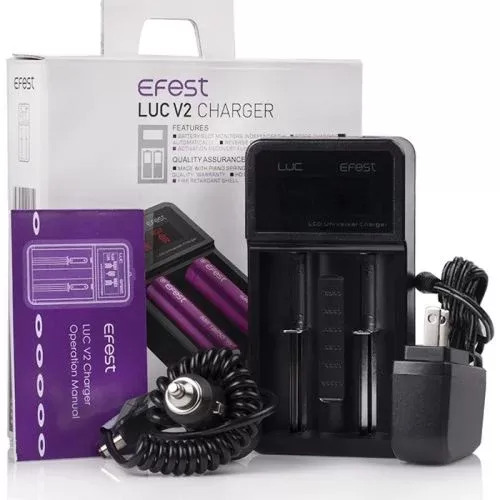
The Efest LUC V2 charger boasts two integrated charging slots, each operating independently to provide efficient and safe charging. This charger prioritizes safety with multiple built-in protections, including reverse polarity protection, over-current protection, short-circuit protection, and a zero voltage activation function. These features ensure the utmost safety while charging your batteries. Compatible with a wide range of batteries, including 10440, 14500, 14650, 18500, 17670, 18650, 18700, 26500, 26650, and more. For charging 15270 or 14250 batteries, the use of spacers is necessary to ensure a proper fit and safe charging experience. Efest LUC V2 Battery Charger Features: HD mini LCD screen displays precise voltage and battery capacity level. Each charging channel has independent display of charging status. Automatically adjusts discharge current to charge different size battery. 4 kinds of protection – over-discharging, over-voltage, short-circuit and reverse polarity protection. Automatically stops when fully changed. With DC wide voltage (12-24V) charging mode Specifications: Input voltage: DC 12-24V Output voltage: 4.1 ±1% 500mA CC current: > 450mA 1000mAh CC current: > 950mA Cut-off Voltage: 4.2V ± 0.05V TC Current, 0.5-1A: ≤60-120mA Auto recharging Threshold Value voltage: 3.9V ± 0.15mA Activation Voltage ( battery voltage < 2V): 0.45 ±0.15mA Operation Temperature: 0-40°C Storage Temperature : -40 – +70°C Compatible batteries: 10440, 16340, 18350, 18500, 18650, 26650, etc. To ensure your safety and maintain the battery’s life and durability, we recommend you follow these rules: Do not over-discharge or overcharge the battery. Doing so will shorten the battery’s life and sometimes, it can make it pop or leak. Please do not short circuit or it will release massive current. Do not play with fire! Do not dispose any kind of battery in or near any fire. Do not stack more than one battery as it may potentially blowout and cause serious damage to yourself and place. Always check battery’s condition to see if there are signs of wear and tear. If there is, please dispose the battery. Do not dispose batteries into the trash as it is against the state’s laws.